








Designing HPE Hybrid IT Solutions – Technical Training Course
Course code:
Designing HPE Hybrid IT Solutions – Technical Training Course - Dates and application
Applying for closed-group training
Application
Build enterprise-ready hybrid IT architectures with confidence. This training program gives you the skills to gather customer requirements, design complete HPE Hybrid IT solutions, and present them with clarity and impact.
Ideal for IT professionals with several years of hands-on experience in HPE server, storage, or netoperational environments who want to strengthen their hybrid IT design skills, consultants and solution architects working on customer-facing projects, and those preparing for the HPE0-S57 Designing HPE Hybrid IT Solutions certification.
The ideal candidate typically has a minimum of:
- three years of design and/or operational experience or equivalent in at least one of the core HPE areas (Server, Storage, and Networking)
- and six months design and/or operational experience or equivalent in other HPE solutions and technologies
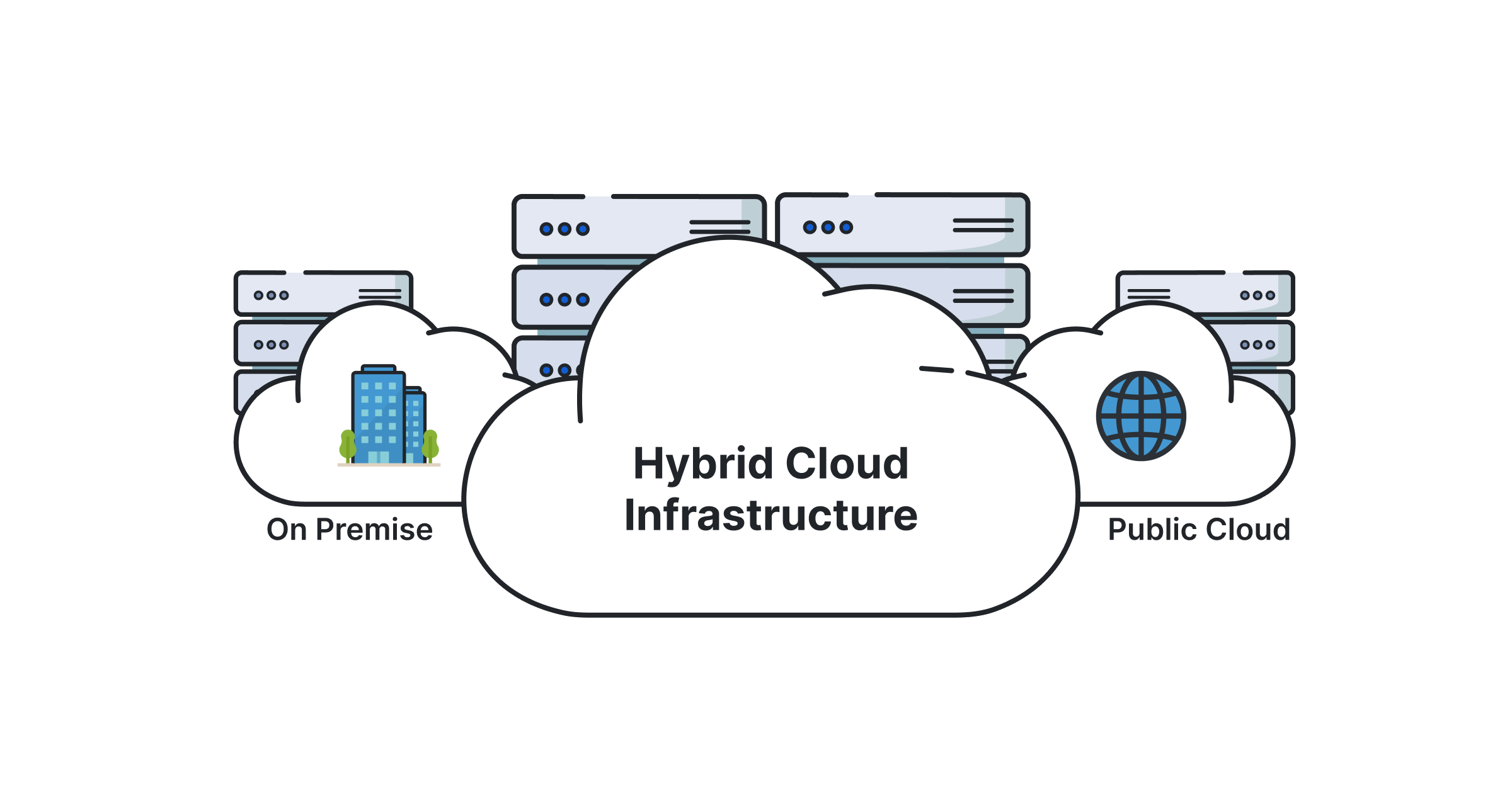
Hybrid IT has become the standard architecture for modern enterprises, blending on-premises systems with cloud services to support fast-changing workloads, data-heavy applications, and scalable digital services. As HPE has shaped this landscape for more than a decade—with ProLiant, Synergy, Nimble, SimpliVity, and the rapidly expanding GreenLake portfolio—it now provides one of the most complete toolsets for building flexible, reliable, and cost-efficient hybrid environments.
This comprehensive program gives you a practical, end-to-end understanding of how these technologies fit together in real customer scenarios.
You develop the skills to gather requirements, design architectures, select components, and validate full HPE Hybrid IT solutions across compute, storage, networking, and software-defined platforms. The knowledge gained applies directly to everyday design work in enterprise projects, presales engagements, modernization initiatives, and cloud-ready infrastructure planning.
By the end, you will be able to architect and present robust HPE solutions that support high-availability workloads, composable infrastructure, hyperconverged platforms, and hybrid cloud integrations—skills widely used in enterprise IT design, consulting, and technical leadership roles.
After you successfully complete this comprehensive program, expect to be able to:
- Describe, differentiate, and apply industry standard architectures and technologies.
- Gather and analyze customer business and technical requirements.
- Recommend and position HPE Hybrid IT products, solutions, tools, and appropriate services for customer use cases.
- Architect and design an HPE solution based on customer needs.
- Present and demonstrate the solution to the customer.
CURRICULUM OUTLINE:
Module 1: Introduction to a Hybrid World
An introduction to Reference Architectures and Reference Configurations.
Activity: Synergy and 3PAR Reference Architecture.
HPE overview
HPE Hybrid IT
Activity: Navigating the Hybrid IT portfolio at the HPE website
Learning check questions appear after prime time 1
Learning check answers are near the end of the module
Summary
Prelearning check question for module 2
Module 2: Architecting and designing Hybrid IT solutions
Assessing the customer’s requirements and environment
Selecting the HPE platform
HPE tools for selecting solution components. Demos of HPE Switch selector, SSD Storage Selector, HPE Storage Sizer, HPE OneConfig Advanced, and HPE 3PAR NinjaSTARS are interspersed throughout this section
Developing the proposal
Solution installation, configuration, and setup
Activity – Lab exercise (emulator): Monitoring storage with HPE InfoSight
Learning check questions appear after prime time 1
Learning check answers are near the end of the module
Summary
Prelearning check question for module 3
Module 3: Recommending Hybrid IT compute solutions for customer use cases
HPE has it all
Customer scenario 1: Microsoft Exchange Server 2016 on HPE ProLiant DL380 Gen10 Server
– Introducing the customer and customer requirements
– Activity: Information resources [Reference Architecture, Exchange 2016 Preferred Architecture, Exchange Server Role Requirements Calculator, Ask the Perf Guy – Sizing Exchange 2016 Deployments]
Building blocks of the solution
Security in HPE servers
Management tools activities
– Activity: ProLiant server management technologies
– Activity: Preboot environment – Demo: UEFI System Utilities and UEFI Shell
– Activity: Performing basic shell operations in UEFI
HPE rack and power activities
– Activity: HPE Reference Architecture for Microsoft Exchange Server 2016 on HPE ProLiant DL380 Gen10 Server
– HPE Sizer for Exchange Server 2016
Backup slides: Alternative servers for smaller environments
Customer scenario 2: HPE Reference Architecture for Microsoft SQL Server 2017 on Red Hat Enterprise Linux with HPE ProLiant DL560 Gen10
– Introducing the customer and customer requirements
– Activity: Information resources [HPE Reference Architecture for Microsoft SQL Server 2017 on Red Hat Enterprise Linux with HPE ProLiant DL560 Gen10, The Exchange 2016 Preferred Architecture, ProLiant DL560 Gen10 server QuickSpecs, Workload-based Performance and Tuning Guide for Gen10 servers and HPE Synergy, and Operating System Support Matrix]
Building blocks of the solution
Processors in HPE servers
Memory for HPE servers activities:
– Activity: HPE Persistent Memory
– Demo: Memory configurator.
Management tools activities
– Activity: Full control over all user interfaces [iLO5]
– Demo: Intelligent Provisioning
– Demo: Smart Storage Administrator
– Activity: HPE Reference Architecture for Microsoft SQL Server 2017 on Red Hat Enterprise Linux with HPE ProLiant DL560 Gen10
Backup slides: Alternative servers for smaller environments
Activity – Lab exercise (emulator): Configuring ProLiant Gen10 and iLO 5 Security.
Learning check questions appear after prime time 1
Learning check answers are near the end of the module
Summary
Prelearning check question for module 4
Module 4: Recommending HPE data center networking solutions for customer use cases
Customer scenario 3: Optimize data center networking with Cloud-First approach
– Introducing the customer and customer requirements (2 slides)
– Activity: Information resources [HPE Cloud-First Reference Architecture Guide—2000 servers, HPE FlexFabric 12900E QuickSpecs, and HPE FlexFabric 5940 QuickSpecs
Building blocks of the solution
Networking technologies and architectures
Management tools activities
– Activity: HPE Cloud-First Reference Architecture Guide—2000 Servers
Backup slides: Alternative components for smaller environments
Activity – Lab exercise (emulator): Configuring HPE Networking.
Activity – Lab exercise (emulator): Working with HPE Composable Fabric (Plexxi)
Learning check questions appear after prime time 1
Learning check answers are near the end of the module
Summary
Prelearning check question for module 5
Module 5: Recommending Hybrid IT Storage Solutions for customer use cases
Customer scenario 4: Red Hat OpenShift on HPE Synergy and HPE Nimble Storage
– Introducing the customer and customer requirements
– Activity: Information resources [HPE Reference Configuration for Red Hat OpenShift on HPE Synergy and HPE Nimble Storage, HPE Deployment Guide for Red Hat OpenShift Container Platform on HPE Synergy with HPE Nimble Storage, and RHEL OpenShift Container Platform: Sizing Considerations]
Building blocks of the solution
– HPE Nimble Storage
– HPE FlexFabric
– Storage technologies
Management tools + activities
– Activity: HPE Reference Configuration for Red Hat OpenShift on HPE Synergy
Module 6: Recommending HPE software-defined and cloud solutions for customer use cases
Customer scenario 6: Red Hat OpenShift on HPE Synergy and HPE Nimble Storage
– Introducing the customer and customer requirements
– Activity: Information resources [HPE Reference Configuration for Red Hat OpenShift on HPE Synergy and HPE Nimble Storage, HPE Deployment Guide for Red Hat OpenShift Container Platform on HPE Synergy with HPE Nimble Storage, and RHEL OpenShift Container Platform: Sizing Considerations]
Building blocks of the solution – HPE Synergy
Management tools activities – Activity: HPE Reference Configuration for Red Hat OpenShift on HPE Synergy and HPE Nimble Storage
Backup slides: Alternative components for different environments
Customer scenario 7: HPE ProLiant for Microsoft Azure Stack data protection with Veritas NetBackup, HPE StoreOnce, and Cloud Bank Storage
– Introducing the customer and customer requirements
– Activity: Information resources [HPE Reference Architecture on VMware Cloud Foundation on HPE Synergy Reference Architecture]
Software-defined infrastructure
Building blocks of the solution – HPE Synergy
HPE Networking
Management tools
HPE RESTful API and PowerShell cmdlets activities – Activity: HPE Reference Architecture for VMware Cloud Foundation on HPE Synergy
Activity – Lab exercise (emulator): Configuring composable infrastructure.
Activity – Lab exercise (emulator): Managing server, networking, and storage datacenter components with HPE OneView.
Activity – Lab exercise (emulator): Using HPE OneView Global Dashboard.
Activity – Lab exercise (emulator): Using PowerShell cmdlets to manage data center infrastructure.
Activity – Lab exercise (emulator): Using REST API for automation and integration.
Learning check questions appear after prime time 1
Learning check answers are near the end of the module.
Summary.
Prelearning check question for module 7
Module 7: Recommending Hybrid IT hyperconverged solutions for customer use cases
Customer scenario 8: VMware Horizon on HPE SimpliVity 380 Gen10
– Introducing the customer and customer requirements
– Activity: Information resources [HPE Reference Architecture for VMware Horizon on HPE SimpliVity 380 Gen10, HPE SimpliVity 380 Gen10 QuickSpecs, and HPE SimpliVity 2600 Gen10 QuickSpecs]
– Activity: HPE SimpliVity efficiency
– Industry standard architectures and drivers
Building blocks of the solution
Management tools activities
– Activity: HPE Reference Architecture for VMware Horizon on HPE SimpliVity 380 Gen10
Backup slides: Alternative servers for other environments
Backup slides: Data virtualization platform
Learning check questions appear after prime time 1
Learning check answers are near the end of the module.
Summary
Prelearning check question for module 8
Module 8: Recommending HPE Density and Mission Critical Solutions for customer use cases
Customer Scenario 9: Artificial Intelligence on HPE Elastic Platform for Analytics
– Introducing the customer and customer requirements
– Activity: Information resources [HPE Reference Architecture for AI on HPE Elastic Platform for Analytics (EPA) with TensorFlow and Spark, HPE Reference Configuration for Elastic Platform for Analytics (EPA), and HPE EPA Sizing Tool]
Building blocks of the solution
High Performance Computing
Big Data
HPE Services
Management tools activities – Activity: HPE Sizer for the Elastic Platform for Analytics
Backup slides: Alternative servers for different environments
Customer scenario 10: HPE Reference Architecture for Oracle 18c OLTP and OLAP workloads on HPE Superdome Flex and HPE 3PAR Storage Reference Architecture
– Introducing the customer and customer requirements
Backup slides: Alternative servers for different environments
Customer scenario 10: HPE Reference Architecture for Oracle 18c OLTP and OLAP workloads on HPE Superdome Flex and HPE 3PAR Storage Reference Architecture
– Introducing the customer and customer requirements
– Activity: Information resources [HPE Reference Architecture for Oracle 18c OLTP and OLAP workloads on HPE Superdome Flex and HPE 3PAR Storage, HPE Superdome Flex Quickspecs, HPE Superdome Flex server architecture and RAS]
Building blocks of the solution
Management tools activities – Activity: Design Superdome Flex solution
Activity – Lab exercise (emulator): Working with HPE Superdome Flex.
Learning check questions appear after prime time 1
Learning check answers are near the end of the module.
Summary
Module 9: Validating and presenting the solution
Customer scenario: Configuring infrastructure for virtualization
– Introducing the customer and customer requirements
– Activity: Configuring infrastructure for virtualization and presenting recommended solution
This programme prepares you for the Designing HPE Hybrid IT Solutions (HPE0-S57) certification examination
Do you have any questions about the training?

Course Administrator


I really liked the Masterfield office, the fact that there were always treats during breaks, and everyone was very friendly (organizers, instructors, receptionists, everyone...). This made learning feel like an experience, which helped me overcome my anxiety.
Petra Szollosi