







ISTQB Certified Tester Foundation Level (CTFL) – Self-Paced Online Training (E-Learning)
E-learning code:
An accredited ISTQB Foundation Level ONLINE e-learning course with 3 months of unlimited access, realistic exam questions and comprehensive preparation for the CTFL 4.0 certification exam.
This practical hands-on training program provides test engineers and test managers with the essential ideas, processes, tools and skills they need in order to set themselves on a path for true testing professionalism.
Training Program is accredited by the ASTQB in 2024 and follows the ISTQB Foundation Level Syllabus - CTFL 4.0.
The Foundation Level qualification is suitable for any professional who needs to demonstrate practical knowledge of the fundamental concepts of software testing, including people in roles such as testers, test analysts, test engineers, test consultants, test managers, user acceptance testers and software developrs.
It is also appropriate for professionals who need a foundational understanding of software testing, including project managers, quality managers, software development managers, business analysts, IT directors and management consultants.
English language proficiency
Prefer live learning? This training is also available as an accredited live-online course in English!
Why Choose Masterfield?
- ISTQB Accredited Training Provider
- More than 15 years of software testing training experience
- Trusted by hundreds of testing professionals
- Training aligned with the latest CTFL 4.0 syllabus
- Flexible self-paced learning


Try out the demo e-learning
This self-paced online learning course includes:
-
Three months of unlimited access to the online course
-
A downloadable electronic copy of the complete set of course materials. No expiration to access. Digital rights management and intellectual property rights protections apply.
-
Sample exam questions throughout the comprehensive program
-
ISTQB Foundation Level Syllabus and the glossary of terms used in Software Testing produced by members of the ISTQB
-
Examples and exercises including solutions
-
Course completion certificate (often used for employer reimbursement)
The objectives of the comprehensive program are the follows:
- Review the major test design techniques with lecture and exercises
- Methodology behind a successful testing program and covers a wide range of issues, from those related to the individual tester to those related to the testing department as a whole
- The testing process is presented, both through theory and hands-on exercises that follow an example project, including the difficult tasks of tracking and presenting tests results
- Creation of a test environment and test automation is also covered, along with system development lifecycles and how they affect testing
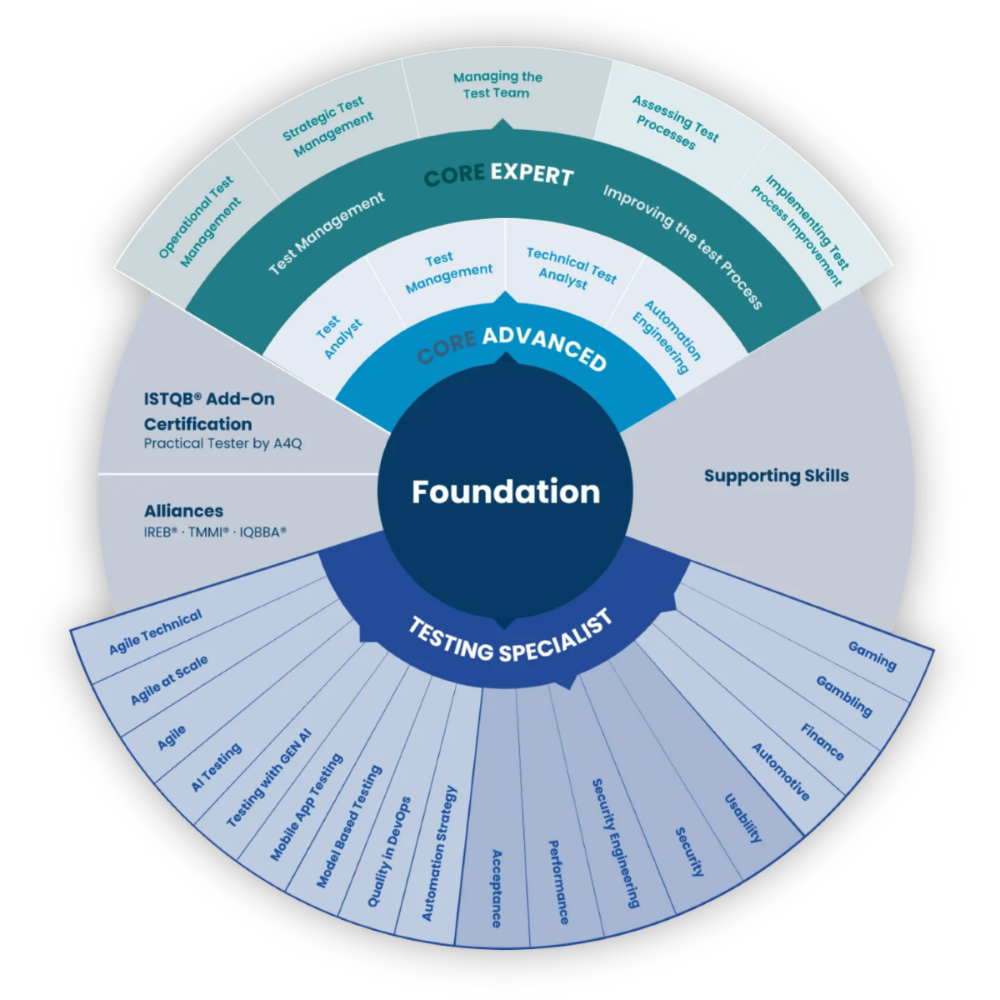
Three months of unlimited online access is provided with the comprehensive program. Each section includes sample exam questions and exercises are included for main techniques.
Curriculum Outline:
1. FUNDAMENTALS OF TESTING
1.1. What is Testing?
1.1.1. Test Objectives
1.1.2. Testing and Debugging
1.2. Why is Testing Necessary?
1.2.1. Testing’s Contributions to Success
1.2.2. Testing and Quality Assurance (QA)
1.2.3. Errors, Defects, Failures, and Root Causes
1.3. Testing Principles
1.4. Test Activities, Testware and Test Roles
1.4.1. Test Activities and Tasks
1.4.2. Test Process in Context
1.4.3. Testware
1.4.4. Traceability between the Test Basis and Testware
1.4.5. Roles in Testing
1.5. Essential Skills and Good Practices in Testing
1.5.1. Generic Skills Required for Testing
1.5.2. Whole Team Approach
1.5.3. Independence of Testing
2. TESTING THROUGHOUT THE software engineering LIFECYCLE
2.1. Testing in the Context of a software engineering Lifecycle
2.1.1. Impact of the software engineering Lifecycle on Testing
2.1.2. software engineering Lifecycle and Good Testing Practices
2.1.3. Testing as a Driver for software engineering
2.1.4. DevOps and Testing
2.1.5. Shift-Left Approach
2.1.6. Retrospectives and Process Improvement
2.2. Test Levels and Test Types
2.2.1. Test Levels
2.2.2. Test Types
2.2.3. Confirmation Testing and Regression Testing
2.3. Maintenance Testing
3. STATIC TESTING
3.1. Static Testing Basics
3.1.1. Work Products Examinable by Static Testing
3.1.2. Value of Static Testing
3.1.3. Differences between Static Testing and Dynamic Testing
3.2. Feedback and Review Process
3.2.1. Benefits of Early and Frequent Stakeholder Feedback
3.2.2. Review Process Activities
3.2.3. Roles and Responsibilities in Reviews
3.2.4. Review Types
3.2.5. Success Factors for Reviews
4. TEST ANALYSIS AND DESIGN
4.1. Test Techniques Overview
4.2. Black-Box Test Techniques
4.2.1. Equivalence Partitioning
4.2.2. Boundary Value Analysis
4.2.3. Decision Table Testing
4.2.4. State Transition Testing
4.3. White-Box Test Techniques
4.3.1. Statement Testing and Statement Coverage
4.3.2. Branch Testing and Branch Coverage
4.3.3. The Value of White-box Testing
4.4. Experience-based Test Techniques
4.4.1. Error Guessing
4.4.2. Exploratory Testing
4.4.3. Checklist-Based Testing
4.5. Collaboration-based Test Approaches
4.5.1. Collaborative User Story Writing
4.5.2. Acceptance Criteria
4.5.3. Acceptance Test-driven Development (ATDD)
5. MANAGING THE TEST ACTIVITIES
5.1. Test Planning
5.1.1. Purpose and Content of a Test Plan
5.1.2. Tester's Contribution to Iteration and Release Planning
5.1.3. Entry Criteria and Exit Criteria
5.1.4. Estimation Techniques
5.1.5. Test Case Prioritization
5.1.6. Test Pyramid
5.1.7. Testing Quadrants
5.2. Risk Management
5.2.1. Risk Definition and Risk Attributes
5.2.2. Project Risks and Product Risks
5.2.3. Product Risk Analysis
5.2.4. Product Risk Control
5.3. Test Monitoring, Test Control and Test Completion
5.3.1. Metrics used in Testing
5.3.2. Purpose, Content and Audience for Test Reports
5.3.3. Communicating the Status of Testing
5.4. Configuration Management
5.5. Defect Management
6. TEST TOOLS
6.1. Tool Support for Testing
6.2. Benefits and Risks of Test Automation
ISTQB Certified Tester Foundation Level (CTFL) certification examination.
The Foundation Level examination comprises 40 multiple-choice questions, with a passing threshold of 65% to be completed within 60 minutes. Candidates taking the examination in a non-native language are granted an additional 25% time allocation, totalling 75 minutes.
Why take it with Masterfield Training?
Masterfield was the first ISTQB Accredited Training Provider in Hungary and has been delivering software testing training since 2009.
Do you have any questions about e-learning?

Course Administrator


The whole training was perfectly and well-structured.
Microsoft Excel Foundation training participant