








ISTQB Certified Tester Foundation Level (CTFL) – Instructor-Led Live Training
Course code:
ISTQB Certified Tester Foundation Level (CTFL) – Instructor-Led Live Training - Dates and application
First training day: 7 December 2026 , Additional training days: 8., 9.


Applying for closed-group training
Enrolment without a date
Join instructor-led online sessions from anywhere in Europe and prepare confidently for the CTFL 4.0 certification exam!
The ISTQB Certified Tester Foundation Level (CTFL) training program is a comprehensive Professional Development Program designed for those who want to gain in-depth knowledge of the principles, processes, and techniques of software testing. The training program covers topics such as the fundamentals of testing, integrating testing into development processes, static testing techniques, test analysis and design, managing testing activities, and using testing tools. By the end of the training program, you will be able to develop effective testing strategies, create quality reports, identify and manage defects, and enhance testing efficiency.
Sign up and lay the foundation for your software testing career with us!
The ISTQB Certified Tester Foundation Level training is recommended for everyone focused on software testing, whether you work in IT or are planning a career change. No prior experience is required, as the program starts from the basics and guides you step by step into the world of software testing. It’s also an excellent choice for experienced testers, as it organizes existing knowledge, enhances it with practical examples, and facilitates exam preparation.
The knowledge gained is not only valuable for testers but also for software developrs, project managers, and business analysts. It helps participants better understand software testing, enabling more effective collaboration during development projects. Whether you are looking for marketable skills to build a new career or deepen your existing knowledge, this program is for you.
- At least a foundational proficiency in English since the training materials is in English and you are also recommended to sit for the certification exam in English.
Prefer self-paced learning? This course is also available as an accredited self-paced online learning format!
Why Learn with Masterfield?
Masterfield was the first ISTQB Accredited Training Provider in Hungary and has been delivering software testing training since 2009.
ISTQB continuously updates the material for each qualification and publishes a new version every few years. The latest, fourth version of the Foundation Level qualification was released in 2023. We place great emphasis on ensuring that our training courses always follow the latest ISTQB topics. In early 2024 we became the first training institution in Hungary to obtain accreditation for our ISTQB CTFL 4.0 version training.
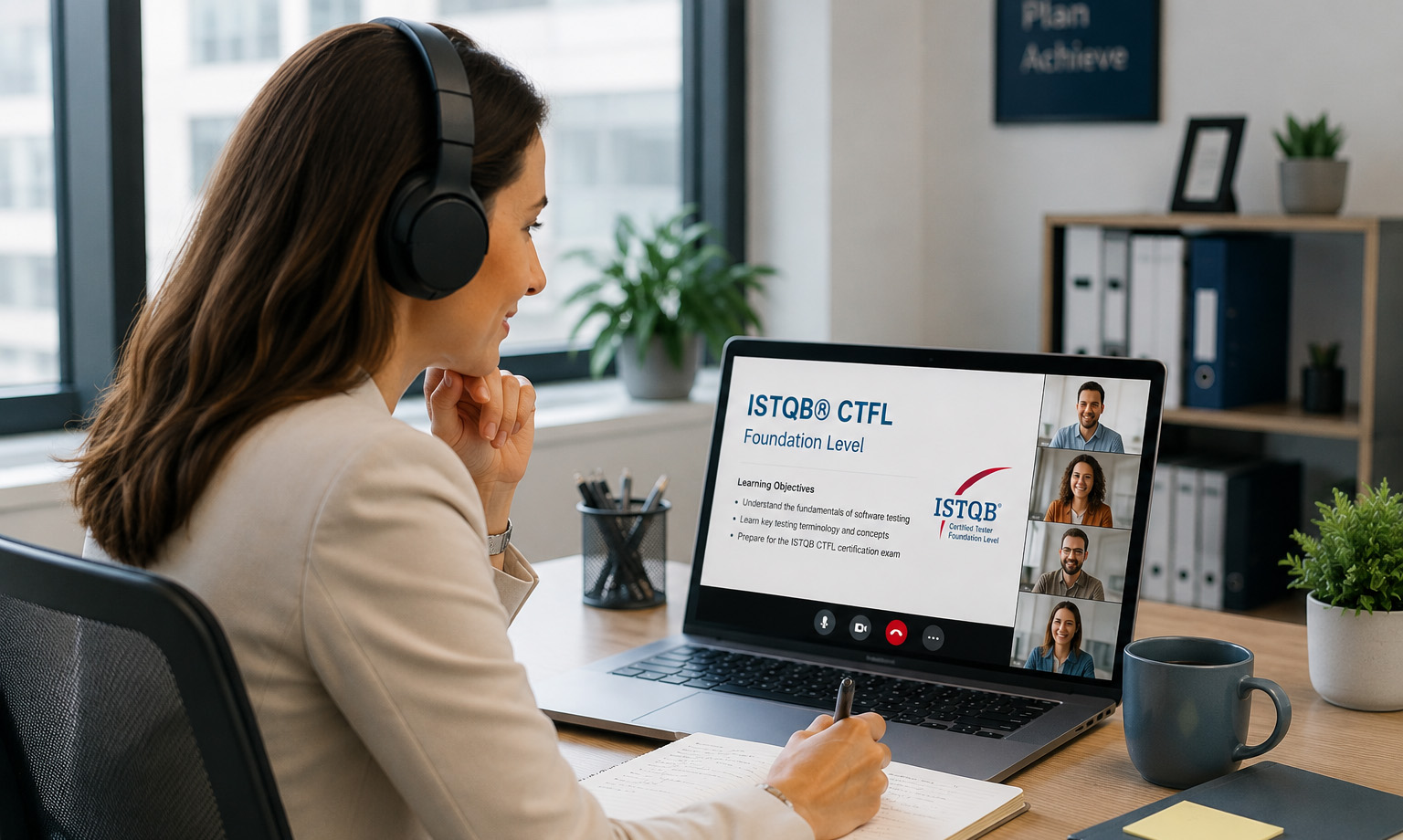
Gain a solid understanding of modern software testing principles, techniques and best practices. This accredited ISTQB Foundation Level course prepares you for the CTFL certification exam while helping you build practical testing skills that can be applied immediately in real-world projects.

By participating in this comprehensive program, you will gain expertise in about the theoretical background of software testing, its various methodologies, following the official course material of the International Software Testing Qualification Board. Besides teaching a lot of the theory and practice of software testing, this comprehensive program also gives learners the knowledge needed to pass the Certified Tester Foundation Level exam.
The success of our program is also reflected in the very high pass rate of our learners. Any learners failing the exam may retake our next Certified Tester Foundation Level course free of charge.
Main Topics:
- The first part of the comprehensive program introduces the principles, processes, and psychology of software testing.
- Next, we compare the phases of development projects and the structure of various development models. In this context, we discuss the levels of software testing (component testing, component integration testing, system testing, system integration testing, acceptance testing) and key testing types (functional and non-functional testing, regression testing, confirmation testing, maintenance testing).
- Exploring static analysis and reviews introduces us to static testing techniques.
- One of the most important parts of the comprehensive program is mastering the process of test analysis, test design, and test implementation. During this, we cover black-box, white-box, and experience-based testing techniques.
- The comprehensive program also covers the basics of test management: the responsibilities of a test manager, testing strategies, defect management, and risk handling are all included in our topics.
- Finally, we delve into the world of tools used in testing.
Each chapter includes practical examples to aid understanding and practice exam questions to help prepare for the certification exam.

After completing the professional development program, you will be able to:
- Understand the fundamental concepts and benefits of testing.
- Identify the appropriate testing approaches and activities based on the testing context.
- Evaluate and improve the quality of documentation.
- Increase the efficiency and effectiveness of testing.
- Align the testing process with the software engineering lifecycle.
- Create and communicate clear and understandable defect reports.
- Understand the factors influencing testing priorities and efforts.
- Recognize the risks and benefits of test automation.
- Identify the essential skills required for testing.
- Understand the impact of risks on testing.
These skills will help you perform your work with confidence and add significant value to your team.
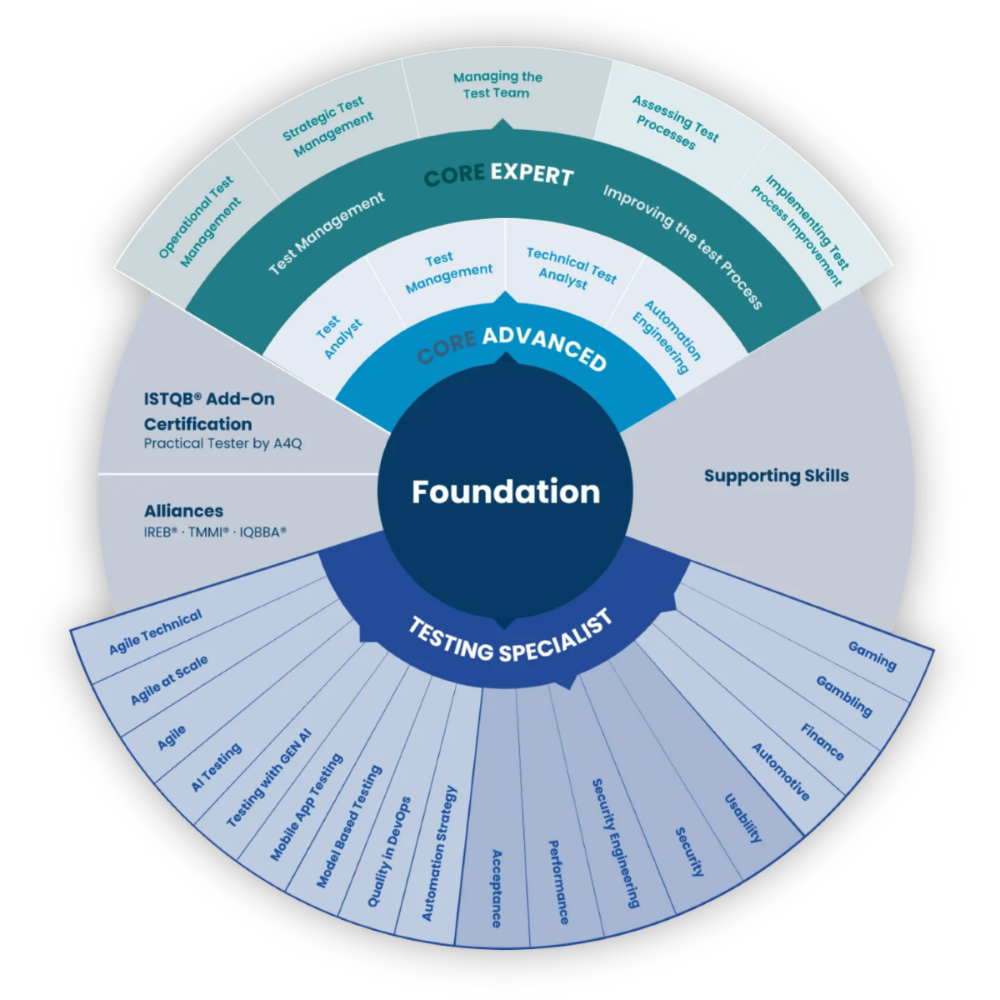
We offer one of the widest ranges of ISTQB courses, with qualified trainers to help you find your way around:
CURRICULUM OUTLINE:
1. FUNDAMENTALS OF TESTING
1.1. What is Testing?
1.1.1. Test Objectives
1.1.2. Testing and Debugging
1.2. Why is Testing Necessary?
1.2.1. Testing’s Contributions to Success
1.2.2. Testing and Quality Assurance (QA)
1.2.3. Errors, Defects, Failures, and Root Causes
1.3. Testing Principles
1.4. Test Activities, Testware and Test Roles
1.4.1. Test Activities and Tasks
1.4.2. Test Process in Context
1.4.3. Testware
1.4.4. Traceability between the Test Basis and Testware
1.4.5. Roles in Testing
1.5. Essential Skills and Good Practices in Testing
1.5.1. Generic Skills Required for Testing
1.5.2. Whole Team Approach
1.5.3. Independence of Testing
2. TESTING THROUGHOUT THE software engineering LIFECYCLE
2.1. Testing in the Context of a software engineering Lifecycle
2.1.1. Impact of the software engineering Lifecycle on Testing
2.1.2. software engineering Lifecycle and Good Testing Practices
2.1.3. Testing as a Driver for software engineering
2.1.4. DevOps and Testing
2.1.5. Shift-Left Approach
2.1.6. Retrospectives and Process Improvement
2.2. Test Levels and Test Types
2.2.1. Test Levels
2.2.2. Test Types
2.2.3. Confirmation Testing and Regression Testing
2.3. Maintenance Testing
3. STATIC TESTING
3.1. Static Testing Basics
3.1.1. Work Products Examinable by Static Testing
3.1.2. Value of Static Testing
3.1.3. Differences between Static Testing and Dynamic Testing
3.2. Feedback and Review Process
3.2.1. Benefits of Early and Frequent Stakeholder Feedback
3.2.2. Review Process Activities
3.2.3. Roles and Responsibilities in Reviews
3.2.4. Review Types
3.2.5. Success Factors for Reviews
4. TEST ANALYSIS AND DESIGN
4.1. Test Techniques Overview
4.2. Black-Box Test Techniques
4.2.1. Equivalence Partitioning
4.2.2. Boundary Value Analysis
4.2.3. Decision Table Testing
4.2.4. State Transition Testing
4.3. White-Box Test Techniques
4.3.1. Statement Testing and Statement Coverage
4.3.2. Branch Testing and Branch Coverage
4.3.3. The Value of White-box Testing
4.4. Experience-based Test Techniques
4.4.1. Error Guessing
4.4.2. Exploratory Testing
4.4.3. Checklist-Based Testing
4.5. Collaboration-based Test Approaches
4.5.1. Collaborative User Story Writing
4.5.2. Acceptance Criteria
4.5.3. Acceptance Test-driven Development (ATDD)
5. MANAGING THE TEST ACTIVITIES
5.1. Test Planning
5.1.1. Purpose and Content of a Test Plan
5.1.2. Tester's Contribution to Iteration and Release Planning
5.1.3. Entry Criteria and Exit Criteria
5.1.4. Estimation Techniques
5.1.5. Test Case Prioritization
5.1.6. Test Pyramid
5.1.7. Testing Quadrants
5.2. Risk Management
5.2.1. Risk Definition and Risk Attributes
5.2.2. Project Risks and Product Risks
5.2.3. Product Risk Analysis
5.2.4. Product Risk Control
5.3. Test Monitoring, Test Control and Test Completion
5.3.1. Metrics used in Testing
5.3.2. Purpose, Content and Audience for Test Reports
5.3.3. Communicating the Status of Testing
5.4. Configuration Management
5.5. Defect Management
6. TEST TOOLS
6.1. Tool Support for Testing
6.2. Benefits and Risks of Test Automation
Instructors


Do you have any questions about the training?

Course Administrator


I enjoyed the entire training. It was perfectly organized, and we got exactly what we were expecting. Thank you very much!
Csaba Papatyi
Széchenyi István Egyetem